Hanging the Bag: A Home Heavy Bag Setup That Won't Take Down the Ceiling
The home heavy bag is the dream purchase that arrives with structural engineering questions: can the ceiling take it, can the neighbors, can the drywall (no). Here is the setup guide that keeps the workout, the deposit and the downstairs relationship intact.

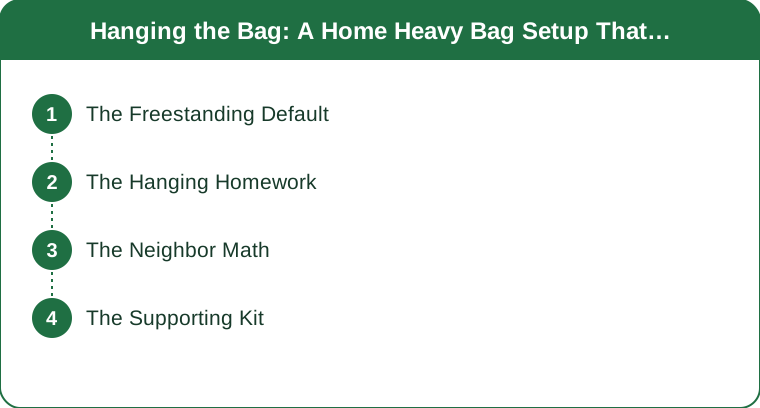
The Freestanding Default
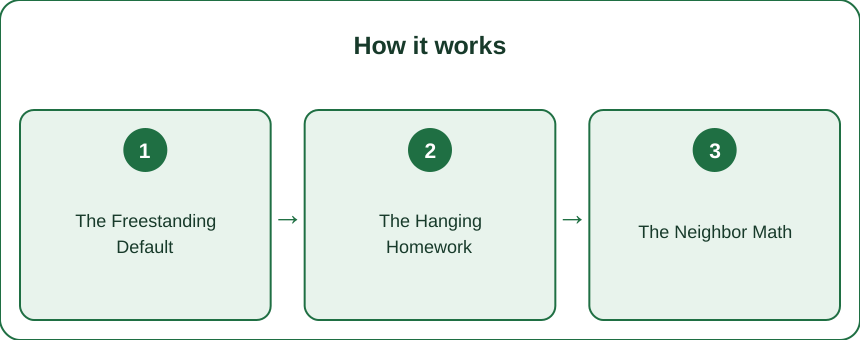
For renters and normal ceilings, freestanding bags win: no mounting, base filled with water or sand (sand is quieter and steadier), repositionable. The trade: they slide with heavy hooks — a rubber mat underneath fixes most of it. This is the right answer for 80% of home boxers.
The Hanging Homework
Hanging bags need a ceiling JOIST or a proper wall-mount into studs — a swinging 70-pound bag multiplies its forces, and drywall anchors are how ceilings become skylights. Stud finder, lag bolts, or the standalone bag stand that skips the structural exam entirely.

The Neighbor Math
Bag work transmits thump downstairs — the mitigation stack: rubber mats under everything, sand-filled over water-filled, daytime rounds, and the uppercut bags or aqua bags that thud softer. The considerate schedule keeps the hobby’s welcome intact.
The Supporting Kit
Wraps ALWAYS (bare-knuckle bag work is a wrist tax with compound interest), bag gloves, a round timer app, and floor space for footwork — the bag is the anchor, not the whole workout. Three rounds of bag plus two of shadowbox is a complete home session.
Freestanding for most, joists for the committed, sand and mats for the neighbors, wraps forever. The bag delivers the workout it promised — once the engineering questions stop swinging.
Keep Reading
This article is for general informational and styling purposes only. Fit, sizing, and product availability may vary.